This year’s UDL-Con: International Live Online will be held virtually on Tuesday, July 21 and Wednesday, July 22, 2026.
Universal Design for Learning (UDL) has reshaped how learning is designed by treating learner variability as an asset, not a problem to fix. Around the world, administrators, educators, leaders, designers, and researchers are implementing UDL to dismantle barriers, expand access, and improve learning outcomes. This work is no longer theoretical. It is active, evolving, and increasingly global.
UDL-Con: International Live Online will take place July 21 & 22, 2026 to convene a worldwide community of leaders in education to examine what UDL looks like in practice and what it must become next. Participants will dig into emerging research, real world implementation, and the implications of the Guidelines, while challenging long standing assumptions about teaching, learning, and ability. UDL-Con: International is a space for serious learning, bold ideas, and collective progress toward more equitable and effective learning systems.
All proposals are due by Sunday, March 1, 2026, at 11:59 p.m. PST (translate to your time zone).
If your organization (for-profit or non-profit) offers services or products to K-12 or higher education institutions, we invite you to explore opportunities within CAST’s partnership program. For inquiries or to discuss participation in UDL-Con, please contact Christine Fox at cfox(at)cast.org. For general questions about UDL-Con, please email us at udlcon(at)cast.org.
Learn more about UDL-Con: International
Proposal Information
We are inviting a diverse group of educators from across the world who bring innovative ideas on educational change and are ready to lead interactive sessions that push thinking and spark meaningful dialogue. We are especially interested in work that examines unique and practical ways that Universal Design for Learning (UDL) is shaping the future of learning. Share your current research, emerging practices, lessons learned from real implementation, and the challenges that continue to demand our attention. Together, we will explore questions such as:
Exploring Technology, Innovation, and Emerging Practices
- How are you using AI and adaptive technologies to amplify the possibilities of UDL and build learner agency?
- What emerging accessibility practices or tools have you integrated into your UDL‑informed designs, and what impact have they had on learner engagement and participation?
- What innovative designs have you used to build creativity, encourage joy and play, or offer maker‑centered learning?
Understanding Accessibility and Reducing Barriers
- How are you leveraging UDL to design learning experiences that proactively reduce barriers and increase accessibility for learners with a wide range of sensory, cognitive, or physical needs?
- What successes have you had using UDL to ensure inclusion of neurodiverse students in your general education classes?
Research, Impact, and Transformation of Learning
- What does your research show how UDL disrupts traditional forms of learning or how it builds learner agency?
- How do you use UDL to foster learner agency at a level where students not only make choices but shape the learning environment itself?
- What new research questions arise when UDL is examined alongside technology and global learning trends?
Global Perspectives and Broader Learning Ecosystems
- How does UDL look different in contexts outside of the U.S., and what has fostered success in your setting?
- In what ways do you use the UDL principles to guide the design of learning ecosystems that extend beyond school walls (e.g., museums, workplaces, after‑school programs)?
Do you have another idea? As always, we hope to learn from you, so please submit a proposal to help us learn more about the ways in which UDL can be creatively used to design for an equitable future.
Target Presenters/Facilitators
CAST seeks presenters and facilitators with diverse viewpoints, cultures, and experiences. We encourage administrators and educators from all settings to apply, including PreK-12 and postsecondary administrators, teachers, professors, researchers, paraprofessionals, instructional coaches, professional development teams that are employees of a school, district state education agency or higher education institution. We also look for presenters and facilitators from a mix of urban, suburban, and rural settings from across the US and the world.
Note for Organizations and Consultants: Professionals employed by an organization or consulting within the PreK–workforce space should coordinate with Christine Fox prior to beginning the submission process to ensure your proposal is routed through the correct partnership channel.
Who is attending?
UDL-Con Live Online attendees include anyone interested in supporting dynamic learning experiences and connecting with a community focused on changing systems to support learner variability. Examples of attendees include educators working both inside and outside of classrooms, teachers, professors, administrators, curriculum designers, technology leaders, specialists, advocacy groups, workforce trainers, activists, disability studies scholars, researchers, parents, students, and more.
Session Formats
July’s UDL-Con: International Live Online will be 100% online, to allow for educators and researchers from across the globe to participate. We plan to offer a variety of session types, all of which should be accessible and universally designed. Session types include:
- Live Interactive Workshops: Live Interactive Workshops are 60-minutes in length. Of this extended time, we expect at least 30 minutes to include hands-on activities for participants. The rest of the session should include new content paired with generative discourse and group collaboration in breakout rooms, chat discussions, and live written collaboration.
- Live Panel Discussion: 60-minute live virtual panel discussions should include two or more participants with unique perspectives. We ask for facilitators to be explicit about the types of questions they will develop themselves and about what percentage of questions, if any, will come from the live audience.
- Virtual Design Lab: This is a 90-minute hands-on session in which participants create usable plans and/or products to take with them.
- Lightning Talks: These are brief, 20-minute lectures similar to TED Talks, in which the presenter discusses new, unique, or engaging ideas related to Universal Design for Learning.
- Asynchronous Recorded Sessions: Recorded sessions may be up to one hour in length, but can be shorter if you prefer. They should be similar to any one of the formats described above and should include methods for asynchronous participant interaction.
Session Facilitator Responsibilities
We ask that session facilitators agree to the following expectations:
- Accepted facilitators of live interactive workshops will receive the early bird registration pricing of $199 (with up to 2 co-facilitators per session). The co-facilitator(s) must be listed on the submission form.
- Facilitators agree to add all session materials to the public schedule no later than June 15, 2026. Facilitators who cannot upload their materials by this deadline will be removed from the conference schedule.
- Facilitators agree to make all session materials and interactions accessible and inclusive. Our UDL-Con Team will provide guidance via drop-in virtual accessibility sessions and design labs.
- Your session materials may include, but are not limited to: Slides, digital handouts, videos, web links, and other items as needed.
Proposal Submission
Proposal submissions must be submitted via the online submission form below.
The deadline for proposal submissions is Sunday, March 1, 2026, at 11:59 p.m. PST (translate to your time zone).
The deadline for proposal submissions is March 1, 2026, by 11:59 p.m. PT. You will be notified in early April if your proposal has been selected.
Acceptance Criteria
Proposals will be reviewed on how closely they meet the criteria below. The full acceptance rubric may be found in the submission guidelines (PDF).
Relevance to the topics:
- Does the proposal answer and clearly explain one of the questions listed in the “Proposal Information” section? Does it offer significant new insight
- Does the proposal clearly explain what will happen in the session?
Alignment with Universal Design:
- Does the proposal articulate a clear, challenging goal that can be achieved during the session?
- Does the proposal clearly explain how the design of the session anticipates and reduces potential barriers to participants achieving the goal by the end of the session?
- Does this proposal highlight a particular tool or service?
Session Tags
We are looking for proposals that represent a wide variety of content areas and age levels. Application scores will be reviewed from the rubric above. Session topics will also be chosen to ensure we have a diverse representation of topics. When submitting your proposal, you will be able to select one primary focus that best represents your topic, the participant roles and job areas best suited for your session, and the student/learner age group your session will focus on.
Session Focus:
- Artificial Intelligence (AI)
- Accessibility and Inclusive Technologies
- Content area (math, ELA, science)
- Career and Technical Education
- Multilanguage Learners
- Parent, Family, and Caregivers
- Research to Practice
- Social Emotional Learning
- Special Education/Disability Studies
- Leadership/Systems Change
Deadlines & Notifications
The deadline for proposal submissions is Sunday, March 1, 2026, at 11:59 p.m. PST (translate to your time zone).
You will be notified in early April if your proposal has been selected.
Accepted facilitators will be required to upload their materials by June 15, 2026. Facilitators who fail to upload materials by this date will be dropped from the conference schedule.
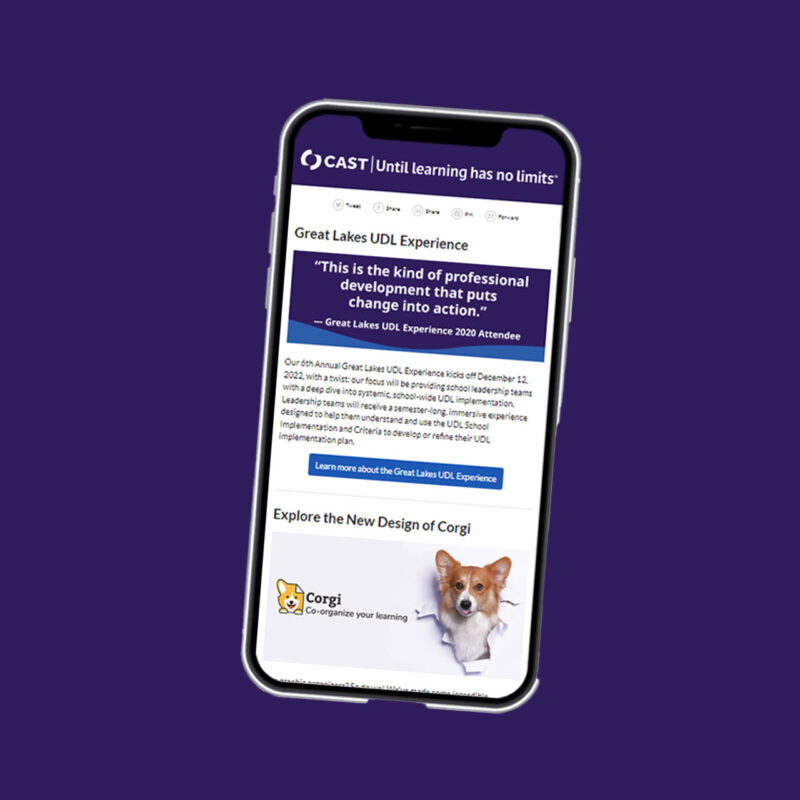
Get the latest UDL-Con updates
Stay informed and get updates on the Call for Proposals, UDL-Con, and other events at CAST by subscribing to our mailing list.
Related articles