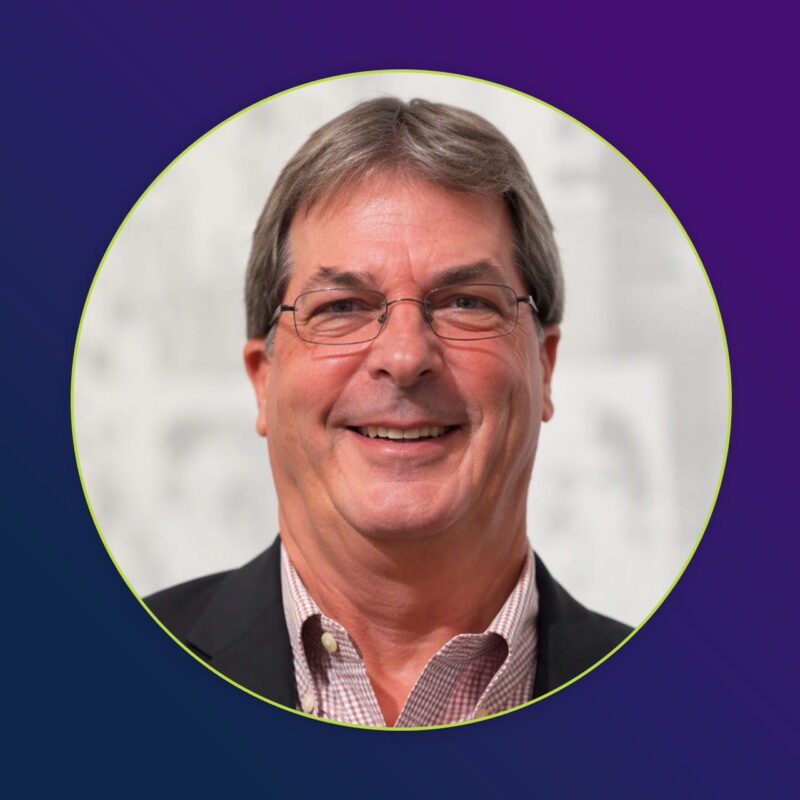
CAST’s inaugural UDL Lifetime Achievement Award honors a leader who helped turn a vision for inclusive education into lasting change for students, educators, and an entire school system.
For Dr. George Van Horn, the ideas at the heart of Universal Design for Learning (UDL) were never just a framework to learn or a set of practices to implement. They reflected a deeply held belief about what education could be when schools made room for the variability of every learner.
“When I started to learn about UDL, it wasn’t really about special ed kids, gifted kids, regular ed kids, these kinds of kids. It was about taking into consideration, giving kids lots of options and choices. So it just fit with my belief system.” — Dr. George Van Horn
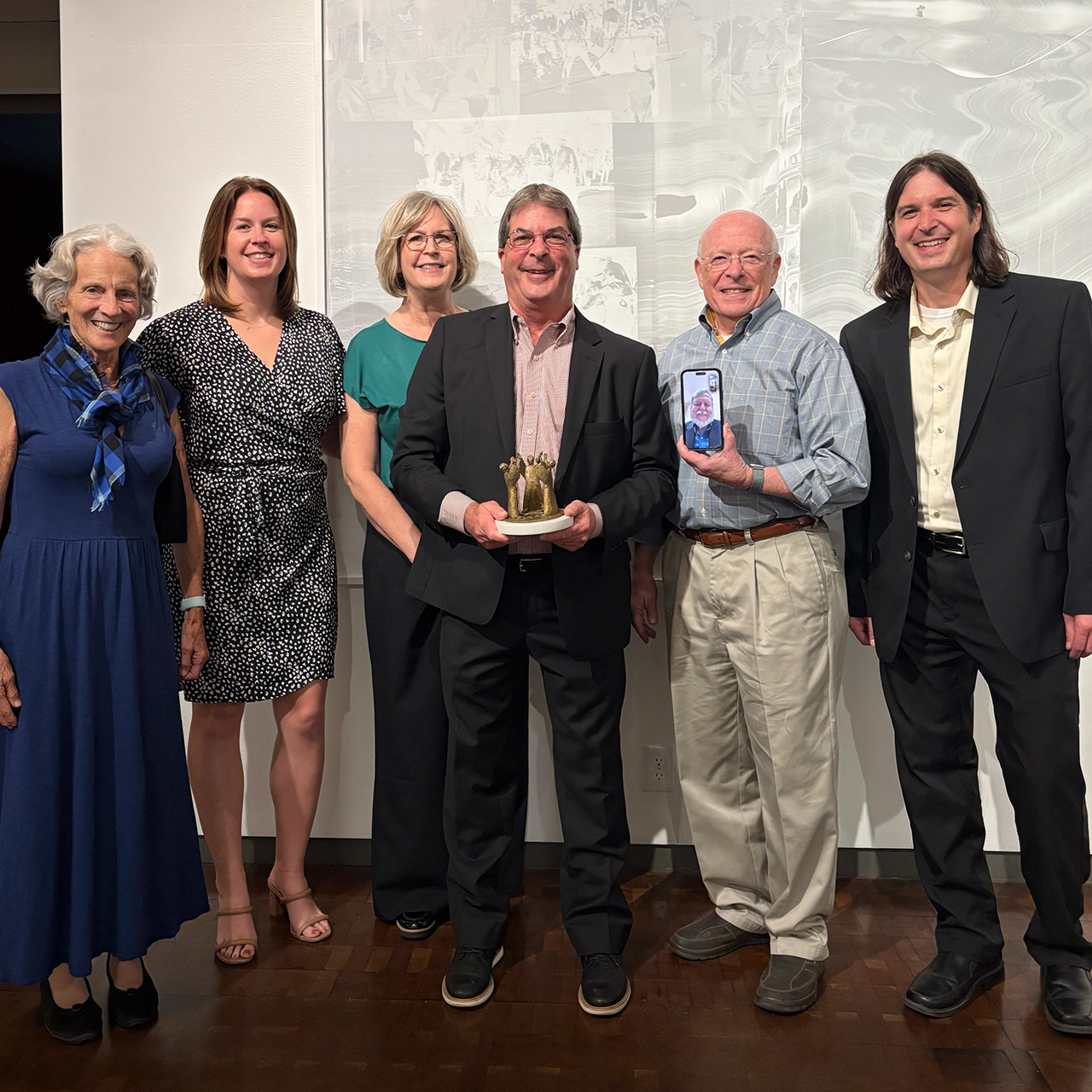
Looking back on his decades-long journey with UDL, George offered a more lighthearted description while accepting CAST’s inaugural UDL Lifetime Achievement Award: “a long, strange trip.”
It is a fitting description of a career marked by persistence, collaboration, unexpected challenges, and a commitment to making education work better for everyone.
At CAST, we have had the privilege of learning alongside George throughout that journey. Presenting him with our inaugural Lifetime Achievement Award was an opportunity to celebrate not only his individual contributions, but also the educators, students, and communities whose work he helped bring into view—and the lasting change they have made possible.
Making teachers’ success visible
During the award ceremony, CAST co-founder David Rose reflected on one of the qualities he remembers most about George: his ability to recognize what teachers were doing well and help others learn from their success.
As David recalled, George didn’t look to take credit for himself. Instead, he created opportunities for educators to share what was working, learn from one another, and build on their progress.
That approach offers an important lesson about leadership. Lasting change rarely comes from one person having all the answers. It grows when people have the support, time, and encouragement to learn together—and when their successes become visible enough for others to build on them.
George brought this philosophy to his work at Bartholomew Consolidated School Corporation (BCSC) in Columbus, Indiana, where he served as director of special education from 2001 to 2023. Alongside colleagues across the district, he helped lead a sustained effort to make UDL a shared framework for teaching and learning.
The challenge was not simply to introduce new instructional strategies. Like many school systems, BCSC had areas where work was happening in silos. Educators were using research-based practices and pursuing improvements, but the district needed a way to connect those efforts around a common vision.
UDL offered that organizing framework.
Rather than treating inclusion as something that happened primarily through additional services for individual students, George and his colleagues worked to improve the learning environment itself. They brought educators together across roles and grade levels, strengthened professional learning, and built structures to help teachers design learning experiences that anticipated learner variability and reduced barriers.
Over time, that commitment became part of how the district operated—not simply another initiative, but a shared approach to improving teaching and learning.
What becomes possible when we design for every learner?
For those of us working to advance UDL, it is one thing to describe the promise of inclusive design. It is another to see what sustained commitment can make possible.
In 2024, CAST partnered with researchers at Indiana University’s Institute on Disability and Community to examine BCSC’s more than two decades of UDL implementation. The resulting case study explored not only student outcomes, but also the leadership decisions, professional learning, relationships, and organizational practices that helped sustain the work.
The findings offer a compelling picture of what can happen when a school system commits to creating better learning opportunities for every student.
Approximately 90% of students with disabilities in BCSC spend at least 80% of their time in general education. The district also consistently outperformed the rest of Indiana on standardized assessments from 2014 to 2019. Students identified as having learning disabilities, who scored far below the state in 2014, had improved to score above the state in 2018.
These findings are particularly meaningful when considered alongside the district’s approach to implementation. BCSC leaders attributed the progress in student outcomes in large part to UDL, with a focus on identifying barriers, expanding options for learning, and supporting educators in improving their practice.
The research also surfaced changes that reach beyond test scores. Nearly three-quarters of surveyed educators reported feeling confident or extremely confident applying UDL in their practice. Teachers described the value of having access to ongoing professional learning and UDL facilitators who could help them rethink lessons while maintaining their learning goals. The district also reported a teacher retention rate above 90% from year to year.
Taken together, these findings tell a story not just about student achievement, but about the conditions that help inclusive practices take root and endure.
They also remind us that this kind of progress does not happen overnight. BCSC invested in ongoing professional learning, established UDL teams and facilitator roles, and embedded UDL into its teacher evaluation system. District leaders made deliberate decisions about how to align resources and support educators over time.
George understood that changing outcomes meant changing more than what happened in an individual classroom. It meant creating the conditions in which educators could continue to grow and students could access meaningful opportunities to learn.
Showcasing UDL Implementation Success with BCSC
Learn more about the district’s journey, the research findings, and the practices that supported sustained implementation.
Seeing the learner and rethinking the experience
During the ceremony, CAST Board Chair Shelley Berman offered another way to understand the power of this work: through the everyday decisions educators make about how students engage with learning and demonstrate what they know.
His example of a student writing a Civil War essay brought the principles of UDL into familiar territory. A learning goal may be clear, but the path a student takes to reach it—and the ways a student can meaningfully demonstrate understanding—can look different from one learner to another.
That is the kind of shift UDL invites. Instead of beginning with assumptions about how students should learn, educators consider the goal, anticipate barriers, and create meaningful options that allow more learners to participate and succeed.
It is a simple idea with far-reaching implications. When we design learning around the assumption that learners vary, we can move beyond asking individual students to adapt to a fixed environment. We can instead ask how the environment itself can better support them.
This thinking was central to George’s work at BCSC. He recognized that improving outcomes for students with disabilities could not be separated from improving teaching and learning for everyone. As the district’s implementation evolved, so did its understanding of what inclusive education could look like—not only in individual lessons, but across curriculum, professional learning, resource allocation, and district leadership.
The work was never about prescribing one way to teach. It was about helping educators understand their learners, identify barriers, and make thoughtful decisions about the environments they create.
Building a legacy that continues
One of the most encouraging findings from the BCSC case study is that the district’s commitment to UDL has continued through leadership transitions and the retirement of longtime champions, including George.
That continuity did not happen by accident. Over time, UDL became part of the district’s culture, supported by professional learning, educator collaboration, and systems designed to sustain improvement. The district continues to reflect, iterate, and refine its approach as student needs and learning goals evolve.
For us at CAST, that is an especially meaningful part of George’s legacy.
Our work has always been about more than sharing a framework. It is about learning with educators and communities, understanding how UDL takes shape in different contexts, and helping translate its principles into practices and systems that make a difference in people’s lives. Our longstanding relationship with BCSC has been part of that learning, too.
George helped demonstrate what becomes possible when a district takes ownership of this work—when educators become leaders and experts in their own communities, when effective practices are shared rather than held by individuals, and when the structures surrounding teaching and learning reinforce a common commitment to every learner.
His influence is reflected in the students who have had greater access to learning, the educators who have continued to grow in their practice, and the school system that has worked to make inclusion a sustained commitment.
As we celebrate George as the recipient of CAST’s inaugural UDL Lifetime Achievement Award, we are grateful for his leadership, his generosity as a colleague and mentor, and his willingness to keep pushing the field forward.
His journey may have been a long, strange trip. But the destination he has helped us work toward remains clear: learning environments that recognize learner variability, support educators, and create opportunities for everyone to succeed.
And the journey is far from over.
Congratulations, George, and thank you for helping all of us imagine, and build, what inclusive learning can be.
Read the full ceremony remarks delivered by CAST Board Chair Shelley Berman in honor of George Van Horn and the inaugural UDL Lifetime Achievement Award.
Related UDL Resources


Related articles