UDL-Con at MassCUE Fall Conference 2026
October 14, 2026 - October 15, 2026
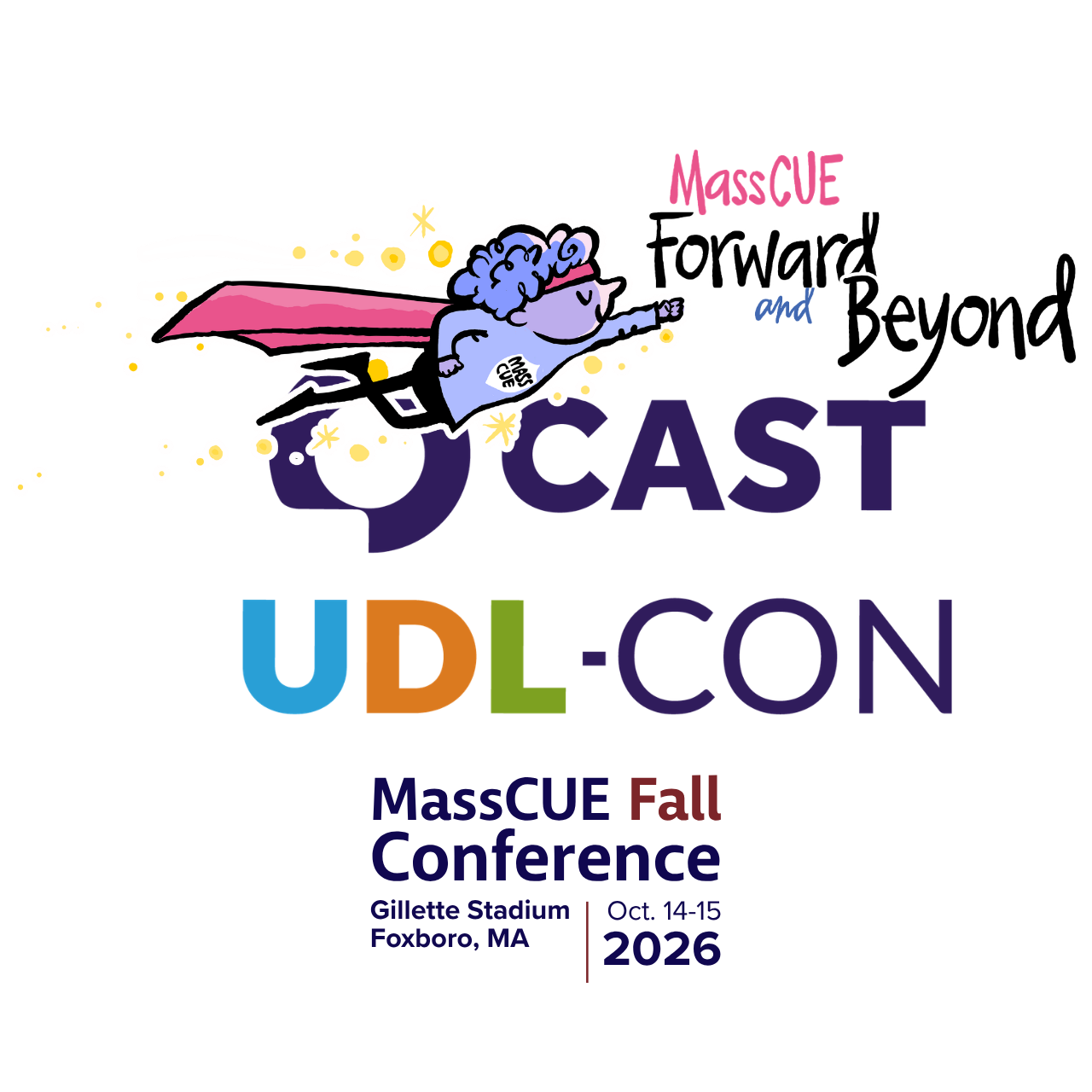
This fall, CAST will bring UDL-Con: International directly to more than 1,500 conference attendees from across New England at the MassCUE Fall Conference 2026. At MassCUE we’ll be offering a series of hands-on, interactive sessions focused on practical UDL implementation and classroom accessibility.
Through joint programming at the MassCUE Fall Conference, shared communications, and thought leadership contributions, MassCUE and CAST will help ensure that UDL principles are woven directly into professional learning experiences so that educators are empowered to design learning environments where all students can thrive. Our partnership with MassCUE reflects a shared, ongoing commitment: co-creating meaningful learning experiences, publishing joint thought leadership, and expanding inclusive practices across the region.
How to attend
Dates: October 14 and 15, 2026
Location: Gillette Stadium, Foxborough, Massachusetts
Ready to join us? Register for MassCUE 2026 and add CAST UDL-Con sessions to your conference experience. We look forward to learning with you in October!
October 14, 2026
10:00 AM, SE Mezzanine
Executive function skills—such as goal setting, self-monitoring, and flexibility—are essential for learning but vary widely across students. This session explores how Universal Design for Learning (UDL) provides a framework for designing environments and practices that proactively support this variability. Participants will examine the relationship between executive functions and learning and explore UDL-based strategies to reduce barriers and scaffold skill development. Through real-world examples and guided design activities, attendees will actively apply strategies to create tools and approaches that support task management, self-regulation, and metacognition. Participants will leave with actionable resources and practical approaches to integrate executive function supports into instruction and school-wide systems, building learning environments that normalize variability and support all students.
Speaker
Niel Albero, Senior Professional Learning and Implementation Specialist, CAST
11:00 AM, SE Mezzanine
Artificial intelligence is rapidly entering classrooms; yet, without intentional design, AI risks reinforcing existing barriers to teaching and learning. This session explores how the intersection of AI and Universal Design for Learning (UDL) can expand access and agency for every learner. Participants will examine how AI tools can support flexible pathways for engagement, representation, and action and expression while honoring learner variability. Drawing on emerging research and classroom examples, the session invites educators to imagine how AI can amplify inclusive learning design. We will explore practical considerations such as scaffolding, enhancing relevance, and fostering learner agency–as well as questions generated among participants. Participants will leave with concrete ideas and reflective prompts to continue to examine the ways AI and UDL can be leveraged in complementary ways to reduce barriers and increase access for every learner.
Speakers
Christine Fox, Chief Growth and Innovation Officer, CAST
Kimberly Zajac, Norton Middle School
Leo Brehm, MassCUE
Scott Soifer, Glint
1:15 PM, SE Mezzanine
Artificial Intelligence is transforming education—but how do we ensure it works for everyone? In this interactive session, we’ll dive into the intersection of AI and accessibility, exploring practical ways these technologies can break down barriers and support learners with diverse needs. Drawing on CAST’s Center on Inclusive Technology & Education Systems (CITES) as a key resource, participants will explore how inclusive leadership can guide responsible, system-wide AI adoption. Through concrete examples and guided discussion, attendees will examine how AI can enhance access and align with evolving accessibility requirements—while also addressing risks such as bias and inequitable implementation. Participants will leave with actionable strategies to evaluate AI tools, leverage CITES supports, and lead inclusive, accessible innovation across their districts.
Speakers
Christine Fox, Chief Growth and Innovation Officer, CAST
Rayna Freedman, Instructional Tech Specialist
3:00 PM, SE Mezzanine
Discover how Universal Design for Learning (UDL) functions as a powerful framework for school-wide improvement. Leaders and practitioners from Palm Springs will share real-world strategies for embedding UDL across classrooms, teams, and systems. This session explores the collaborative journey of implementing UDL school-wide, highlighting lessons learned, success stories, and practical approaches for scaling change. Participants will examine how UDL aligns teams around a shared vision for inclusive practice and supports sustained implementation across classrooms and initiatives. Through analysis of examples from UDL districts, participants will identify replicable practices and strategies for scaling UDL. The session also provides practical tools and protocols to build staff capacity, strengthen collaborative problem-solving, and foster inclusive learning environments that elevate engagement and strengthen school culture.
Speakers
Niel Albero, Senior Professional Learning and Implementation Specialist, CAST
Carmen Amaral, Greater New Bedford Regional Vocational Technical High School
Scott Thibault, Greater New Bedford Regional Vocational Technical High School
October 15, 2026
10:00 AM, SE Mezzanine
Designed for administrators and instructional coaches committed to designing and implementing inclusive digital learning environments that work for each learner, this hands-on session brings together CAST and district leaders to explore practical strategies for inclusive implementation. Participants will examine how the Center for Inclusive Technology and Education Systems (CITES) supports district leaders in moving from isolated accommodations to sustainable, systemwide practices that improve access, participation, and learning outcomes. The session will highlight current trends in assistive technology and specialized supports to address learner variability including students with disabilities, Attendees will leave with real time resources and actionable ideas for aligning leadership, coaching, and classroom practice to strengthen inclusive digital learning across general and special education settings.
Speakers
Christine Fox, Chief Growth and Innovation Officer, CAST
11:00 AM, SE Mezzanine
Learn how technology can support ALL students and enhance your inclusive practices at FETC! Join us for this kick-off led by special education and inclusive learning experts to help you navigate FETC’s 2026 program offerings and meet peers with similar interests. Hear what’s on the horizon for inclusive practices, assistive technologies and special education and gain strategies to make the most of your time at FETC. Gain information on “can’t miss” workshops and sessions on hot topics, including Universal Design for Learning, tools for differentiation, accessibility, inclusive STEM activities, and more!
Speaker
Melissa Sanjeh, Senior Director of Professional Learning and Implementation, CAST
1:15 PM, SE Mezzanine
This session highlights teacher and student voices from an international study exploring how school systems can be redesigned toward inclusive education using Universal Design for Learning (UDL) and inclusive technologies. The study is a collaborative partnership among researchers in Lithuania, Norway, Ukraine, and the United States. Data collection includes focus groups with educators to explore their perspectives on implementing UDL and inclusive practices as well as focus groups with kindergarten through middle school students to explore their schooling experiences. Initial findings are uncovering educators’ emphasis on specific approaches that build inclusive environments and the importance of school cultures that nurture collaboration, feedback, and reflection. Findings are also revealing students’ perceptions of the value of community, learner agency, and joy. Throughout the session, participants will be supported to make connections to their own contexts and experiences.
Speaker
Jenna Gravel, Senior Director of PreK-12 Research & Senior Research Scientist, CAST
3:00 PM, SE Mezzanine
Explore how Universal Design for Learning (UDL) and trauma-informed practices work together to create inclusive, responsive learning environments. Melissa Sanjeh, Senior Director of Professional Learning and Implementation at CAST, and a former alternative school educator and licensed social worker, will be joined by a school leader who has implemented both frameworks to share system-level insights. Participants will build understanding of the neuroscience behind each approach and examine how they intersect to support engagement, access, and well-being. Through interactive activities—including reflection, collaborative discussion, and guided design—participants will apply strategies to reduce barriers, support regulation, and foster belonging. Designed using UDL principles, the session offers multiple ways to engage and contribute. Participants will leave with practical strategies and tools to integrate both frameworks into classrooms and schoolwide systems.
Speaker
Melissa Sanjeh, Senior Director of Professional Learning and Implementation, CAST
Sherann Alkins, ABCD University High – Former Principal
About UDL-Con: International 2026
UDL-Con: International 2026 is a global series of events dedicated to advancing Universal Design for Learning (UDL), a framework for addressing the educational needs of diverse and variable learners in many settings across all stages of life. Throughout 2026, UDL-Con is bringing the UDL community together through a series of free webinars, a live two day global online conference, and in-person events designed to spark innovation and strengthen inclusive learning.
Find More Events