
For district and school leaders, the screen-time debate is not simply about reducing device use. It is about distinguishing between technology that distracts from learning and technology that makes learning more accessible, inclusive, and effective. The more useful question is not “How much screen time is too much?” but “How is technology helping students access, participate, and make progress?”
That shift matters because district technology decisions shape instruction, accessibility, student support, and family trust. A recent U.S. Department of Education Dear Colleague Letter reinforces this approach by encouraging schools to evaluate technology by its purpose, implementation, and impact on student learning.
Why does quality educational technology matter for student learning?
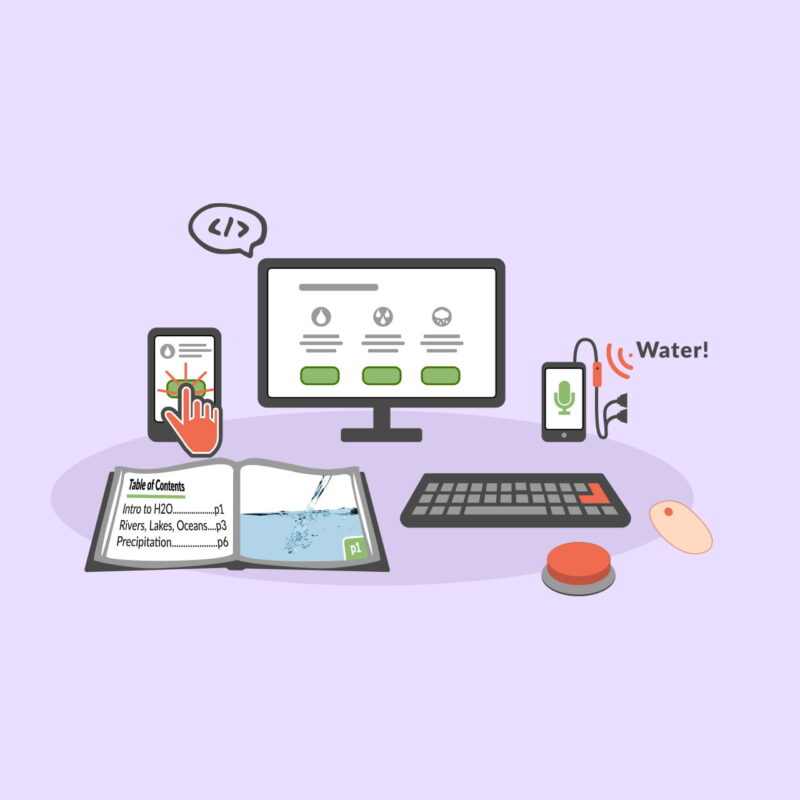
Quality educational technology expands access, strengthens instruction, and helps students make academic progress. For students with disabilities, technology is often essential for effective communication, access to the curriculum, equitable assessment, independence, and meaningful participation in learning.
That is why districts must look beyond the number of minutes of screen time and ask whether technology is improving the learning experience for the students who rely on it most.
A CITES lens on educational technology
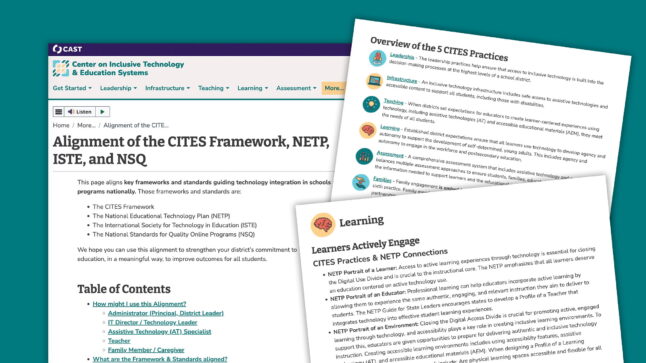
The Center on Inclusive Technology & Education Systems (CITES) Framework gives districts a clear roadmap for putting the federal guidance into action across five areas: Leadership, Infrastructure, Teaching, Learning, and Assessment, with family engagement embedded throughout.
Leadership: Start with vision, not devices
When conversations focus only on the amount of time on screens, districts can lose sight of why technology is being used in the first place.
Strong district leadership helps establish a shared vision that technology should:
- Support fair learning opportunities
- Improve accessibility and inclusion
- Advance instructional goals
- Be evaluated based on student outcomes
District leadership puts the Dear Colleague Letter into practice by anchoring technology decisions in learning goals, accessibility, and student outcomes—not in the tools themselves.
Infrastructure: Build systems that support access
The Dear Colleague letter encourages schools to be intentional about the digital experiences students encounter. Intentionality requires infrastructure.
An inclusive technology infrastructure ensures:
- Accessible digital content and materials
- Personalized learning devices
- Data privacy and security protections
- Reliable access to assistive technologies
- Coordinated decision-making among IT, EdTech, accessibility, and instructional teams
Without these systems in place, technology decisions often become more reactive rather than strategic.
District Reflection: Is the technology selected and used across the district usable by the broadest range of learners?
Teaching: Focus on purposeful use
Technology should support strong pedagogy rather than replace it. Purposeful inclusive teaching use begins with clear learning goals and asks how technology can expand engagement, improve access to information, and support learner variability. These questions align closely with Universal Design for Learning (UDL), helping educators design flexible and inclusive learning experiences from the start.
District Reflection: Do educators have the professional learning and coaching needed to use technology purposefully?
Learning: Expanding participation and opportunity
For many students, technology is not merely convenient. It is essential for learning.
Students may rely on:
- Text-to-speech
- Speech recognition
- AAC systems
- Captioning
- Accessible educational materials
- Assistive technology tools
In these cases, discussions about screen time must be balanced with discussions about access. Technology often serves as the bridge that enables communication, participation, independence, and educational progress.
The key question is not whether students are using technology. It is whether they can meaningfully participate and make progress in learning because of it.
District Reflection: How are students with disabilities and other marginalized learners represented in technology planning and decision-making?
Assessment: Measure What Matters
The U.S. Department of Education encourages schools to evaluate technology based on measurable student outcomes. The Assessment practice of the CITES Framework reinforces this idea by encouraging districts to examine whether technology is:
- Improving access to instruction
- Supporting learner growth
- Providing more accurate information about student performance
- Reducing barriers during assessment
Rather than measuring success by the amount of technology used, districts should evaluate its impact on teaching, learning, and student outcomes.
District Reflection: What evidence do we collect to determine whether technology is improving outcomes for students?
Family Engagement in Educational Technology and Accessibility
One of the unique features of the CITES Framework is that family engagement is embedded across every area of practice. As districts and schools navigate conversations about educational technology and screen time, families need opportunities to:
- Understand why technology is being used
- Learn how accessibility features support learners
- Share concerns and experiences
- Participate in technology decision-making
Meaningful partnerships help ensure that technology supports learning in ways that align with family values, student needs, and district goals.
District Reflection: How are families engaged in conversations about technology use and technology decision-making?
Looking Ahead
The Department of Education guidance reminds us that educational technology should be judged by its educational value, not the amount of time students spend using it. The CITES Framework helps districts build systems where technology is purposeful, accessible, fair, and aligned with student outcomes. As districts navigate conversations about screen time, one question matters most: Is our technology helping every learner access, participate, and make progress with their learning?
Practical takeaways for districts
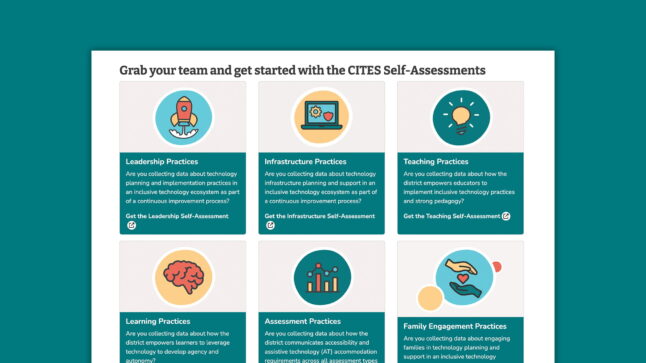
Ready to evaluate your district’s technology systems? District teams can use the Dear Colleague Letter and the CITES Framework to translate reflection into action. Explore the CITES Framework, complete a CITES self-assessment, and identify concrete next steps for improving accessibility, inclusion, and student outcomes across your technology ecosystem
- Start with clear, rigorous learning goals.
- Separate educational and recreational screen use.
- Use the CITES Framework to guide decisions.
- Plan for accessibility from the start.
- Support educators with targeted professional learning and coaching.
- Engage families as partners.
- Measure impact, not minutes.
- Choose one concrete next step.
Frequently asked questions about educational technology and screen time
Q: Does more screen time always harm learning?
A: Not necessarily. Educational technology should be evaluated based on its instructional purpose, accessibility, implementation, and impact on student learning.
Q: Why is educational technology important for students with disabilities?
A: Many students rely on assistive technology, accessible educational materials, text-to-speech, captioning, and AAC tools to participate in learning without the technology, these students are not able to participate on a level playing field with their peers.
Q: How can districts evaluate educational technology?
A: Districts can evaluate technology by examining accessibility, instructional alignment, implementation quality, family engagement, and measurable student outcomes.
CITES Resources
Related articles