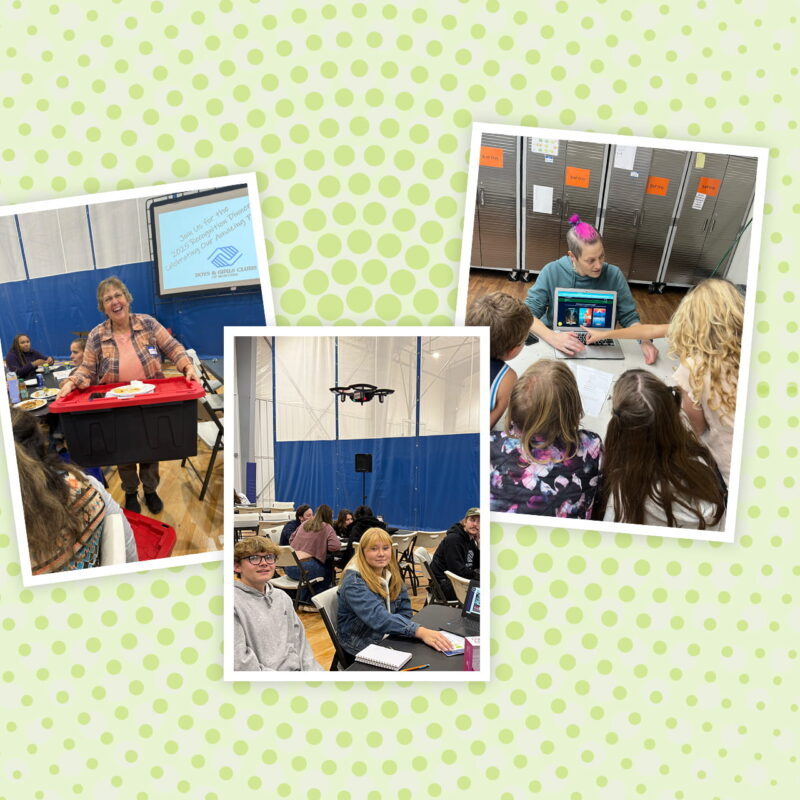
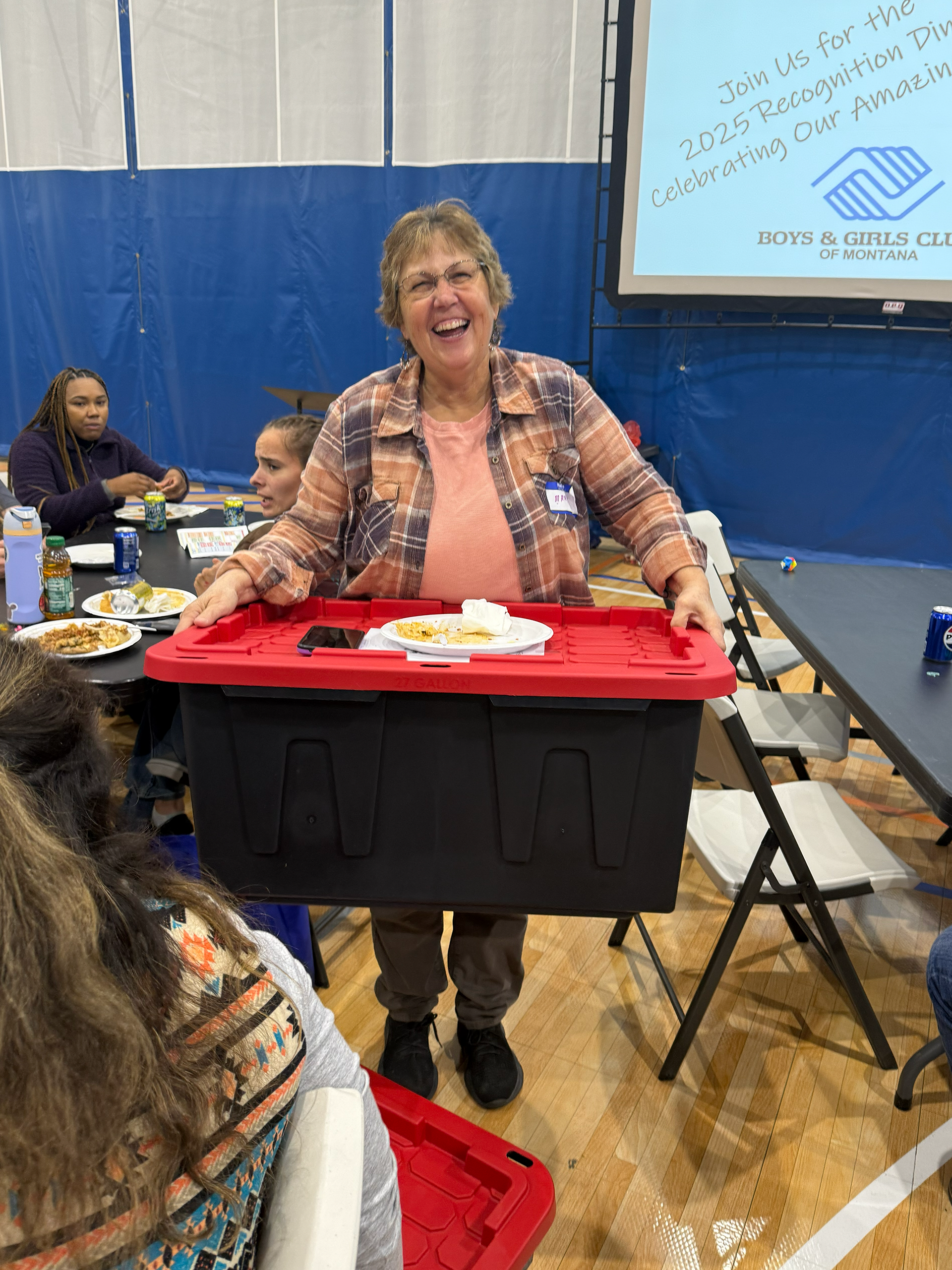
In October 2025, 130 staff members and Youth Leaders from Boys & Girls Clubs (BGC) across Montana gathered in Polson, Montana, for their annual Fall Conference. Joined by national leadership, they focused on professional growth and the collective mission of youth development. Hosted by the Boys & Girls Club of the Flathead Reservation & Lake County, the event served as the launch point for a new statewide initiative: AI in the Big Sky—a collaboration between CAST, aiEDU, and Montana’s Boys & Girls Clubs.
Bridging the AI Gap in Rural Education: Data and Insights
Grounded in CAST’s extensive research on Universal Design for Learning (UDL) and inclusive professional learning for educators, this initiative was designed to build staff confidence and comfort when teaching about artificial intelligence, regardless of their prior experience.
Before they received AI Field Kits and training, participants from each BGC site completed a pre-survey to establish a baseline of AI knowledge and confidence. These same metrics, along with shifts in instructional practice, will be tracked through post-surveys as the program progresses.
The baseline data collected from Montana Boys & Girls Club staff at the time revealed new opportunities and interest:
- There was a gap in instruction: 80% of staff had never taught students about AI, and only 2.4% had discussed it regularly with learners.
- They didn’t know where to start: 36.5% of staff weren’t using any AI tools they were aware of, and 34.1% of staff had never used AI to develop a lesson plan, citing a lack of knowledge or how to start.
- Tool preferences varied: Of the staff using AI tools, ChatGPT was the top choice (used by 50.6%), followed by Google Gemini and Grammarly (both at 21.2%), and Microsoft Copilot (5.9%).
- They recognized the need for AI literacy: 62.4% of staff believed it was extremely important for students to know how to use AI.
These insights highlight the importance of providing accessible, guided entry points, helping educators move from curiosity to confident experimentation.
The AI Field Kit: A Portable Makerspace for Rural STEM
With support from aiEDU’s Rural & Indigenous Community Catalyst Program, CAST provided each of the 31 participating sites with a resource packed AI Field Kit—a portable makerspace filled with drones, flying orbs, and iPads. These kits, paired with three specialized artificial intelligence (AI) learning protocols, are designed to help staff and youth improve their AI literacy and explore AI tools safely, creatively, and ethically.
Before long, the atmosphere at the conference was buzzing—literally—with excitement as drones hovered overhead and flying orbs zipped across the gym. This enthusiastic response to the AI Field Kits was a sign that Montana’s educators were ready to lead the charge in AI literacy.
The AI Learning Protocols
- AI for Homework Help Protocol (PDF): Guidance on how to help youth use AI as a tutor, not a shortcut.
- Flying Orb Protocol (PDF): An activity to build teamwork, belonging, and STEM skills through drone-assisted play.
- Light Up Pop-up Card (PDF): An introduction to electronic circuits and using AI to modify instruction.
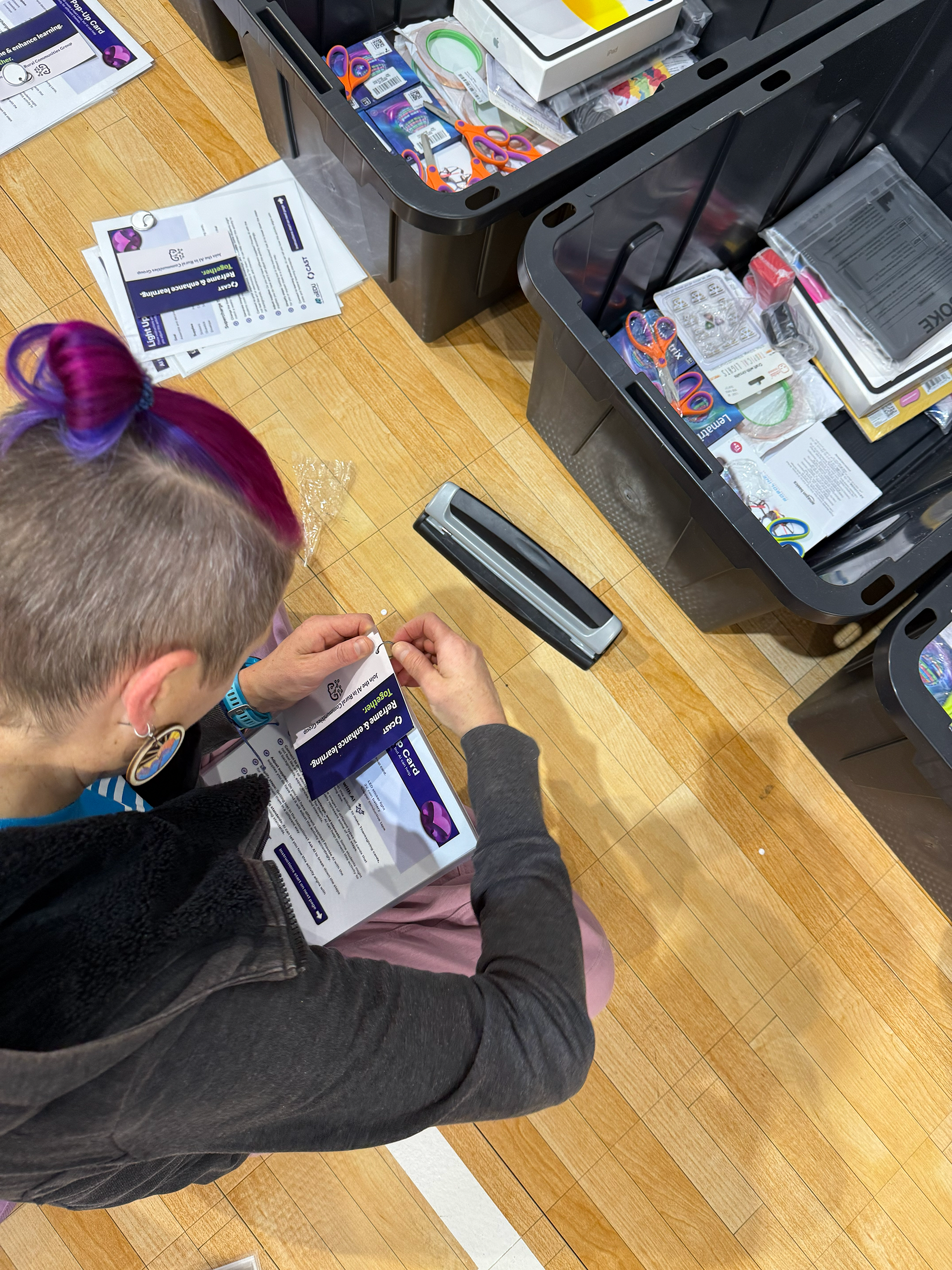
The event came to life through the leadership of Hilary Lozar (STEM Coordinator for the Flathead Reservation Clubs) and Aric Cooksley (CEO of the Boys & Girls Club of the Flathead Reservation & Lake County). Their vision, hospitality, and community-centered approach transformed the conference into both a celebration and a launchpad for equitable AI learning across Montana.
The feedback received from Boys & Girls Club staff and leadership about the AI Field Kit was overwhelmingly positive.
“Everyone was so excited to get a set of drones and drone training, and to be able to follow up with sessions teaching them how to implement good AI practices in their Clubs! This will definitely be a stand-out event for Clubs around the state,” said Lozar.
Hands-On Learning Meets Ethical AI
Rather than starting with theory, the first evening of the conference kicked off with a burst of motion and play. By anchoring the learning activities in the principles of UDL and insights from CAST’s Take Flight drone research, the training provided multiple paths for exploration and learning, intentionally turning potential intimidation into active engagement from the start. The gym quickly transformed into a testing ground as staff began experimenting with coding drones and navigating orbs through the air.
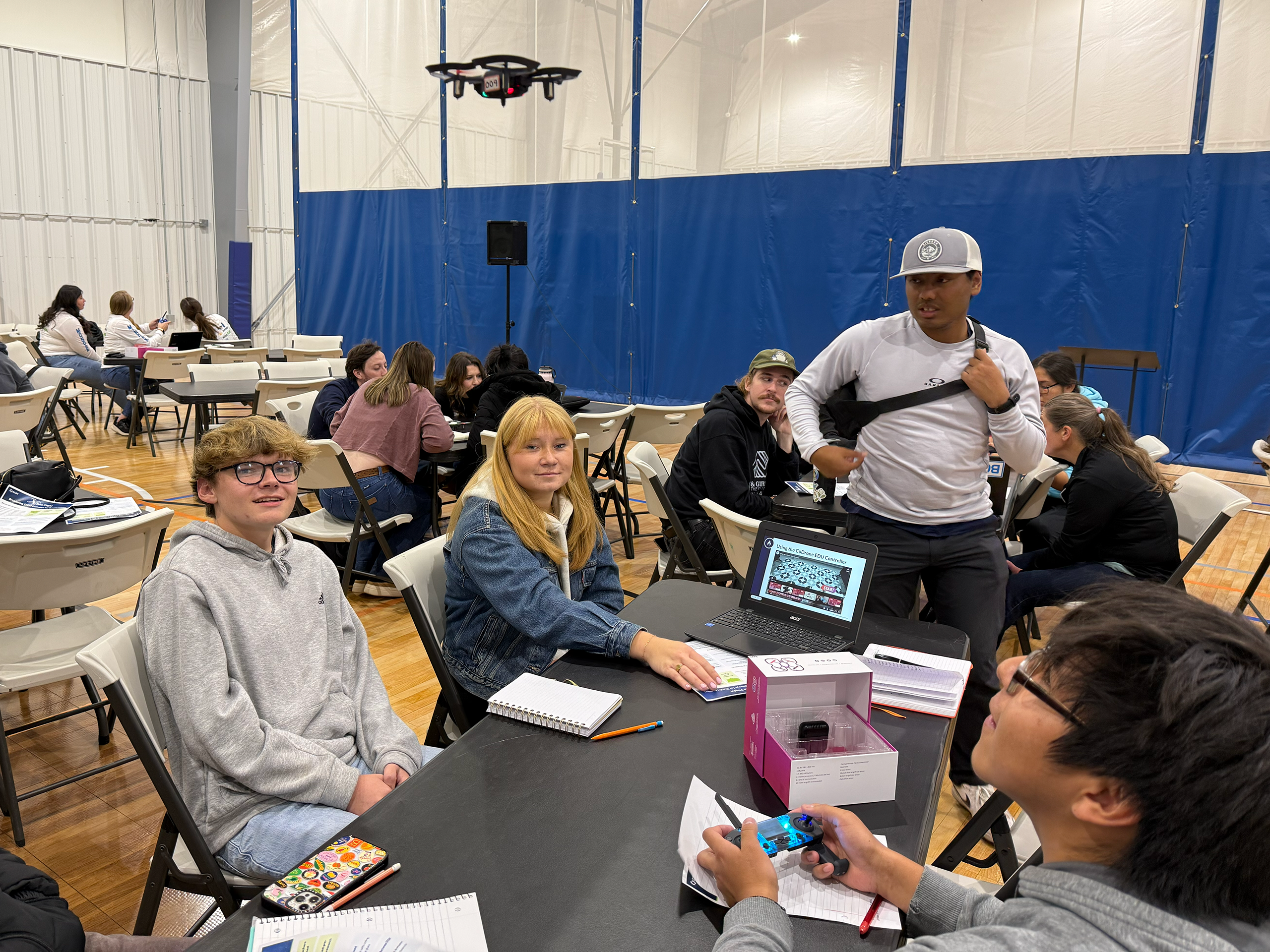
In the midst of the laughter and the zipping of orbs, something deeper was happening: colleagues were already building the teamwork and problem-solving skills they’d soon be passing on to their students.
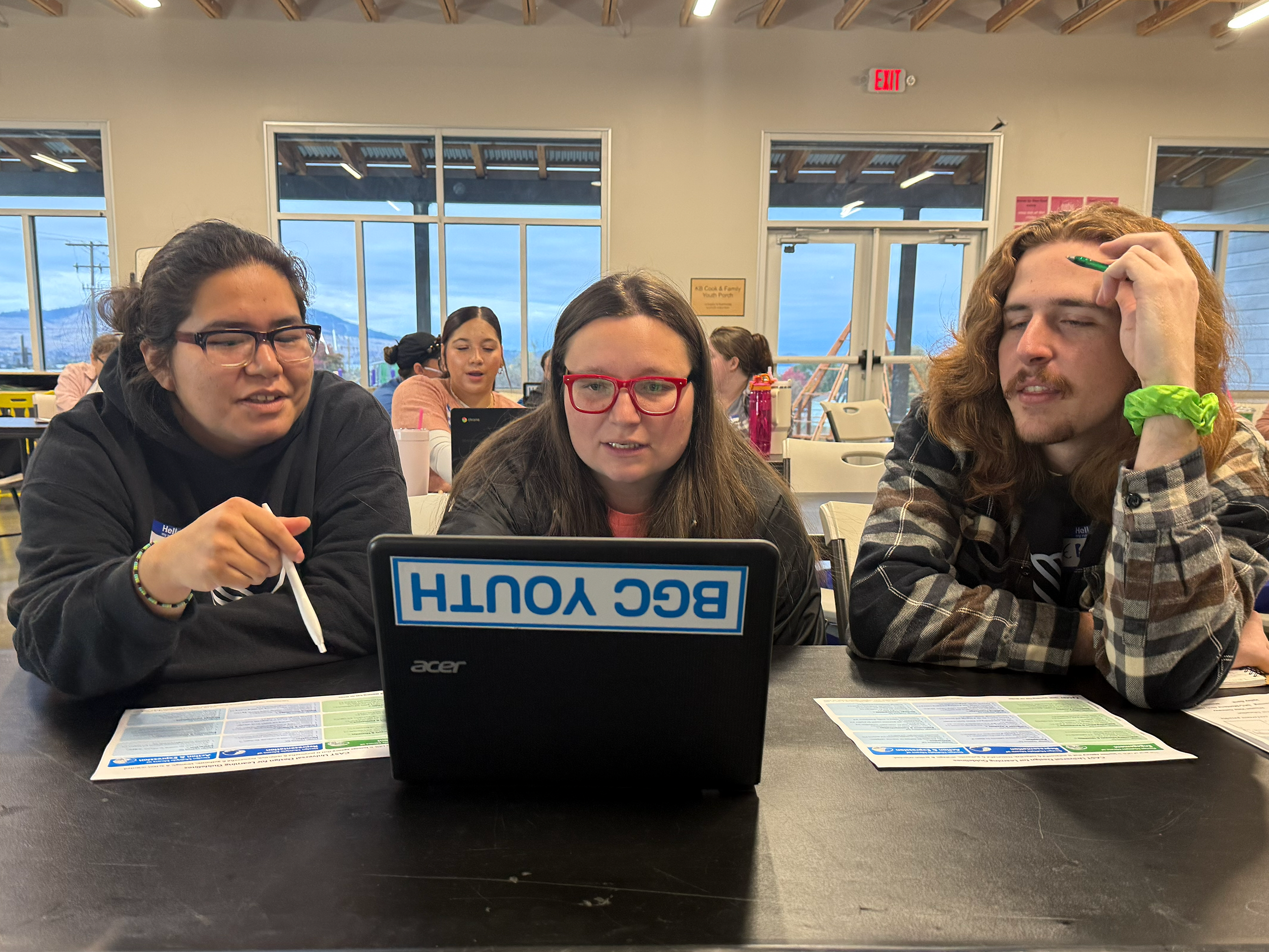
Over the next two days, BGC site staff, CEOs, and managers received immersive, hands-on training in topics rotating between Universal Design for Learning, executive functioning, and AI for program development.
In sessions led by Dr. Amanda Bastoni of CAST, participants explored how inclusive design, as they had just experienced, anticipates learner variability so every youth can find meaningful ways to participate. Connor Mulvaney, aiEDU’s Rural Trailblazers Lead, guided participants through an introduction to AI and a deep dive into the AI for Homework Help protocol. The homework sessions prompted reflection on ethical use, modeled transparency, and redefined what ‘help’ truly means in the context of youth development.
Mulvaney shared: “Staff were highly engaged and thought deeply about how AI can support them and their Club members. We built a foundational understanding of AI technology and discussed ways to talk to Club members about AI. I really enjoyed working with this group.”
Together, these experiences connected practical STEM skill-building with digital ethics, demonstrating how technology can nurture belonging instead of intimidation.
From Training to Practice: Ongoing Support to Sustaining Change
Taking what they’ve learned at the conference, each participating Boys & Girls Club will integrate the AI Field Kit activities like the Flying Orbs Teamwork Challenge and AI for Homework Help Protocol into their after-school STEM programming locally.
Ongoing support to integrate the protocols will be provided by CAST and aiEDU through virtual Professional Learning Communities (PLCs) similar to CAST’s UDL and AI learning community, as well as optional on-site coaching with aiEDU’s Connor Mulvaney. Participating Clubs will document the journey by sharing photos, insights, and outcomes as youth begin to engage with the kits and activities.
Early reports suggest a cultural shift already underway: Educators who once felt uncertain now describe AI as a “creative partner.” Access and agency are growing side by side.
The Future of STEM and AI Education in Montana
While the complete data will tell the long-term story, we’re already documenting how accessible, hands-on AI learning shifts educator practice and deepens youth engagement.
The immediate impact of AI in the Big Sky was best captured by the staff who returned home ready to lead their communities into the future. As they left Polson, their newfound confidence was summed up in a simple, shared sentiment: “We can do this!”
That sentiment was confirmed by Club CEO Aric Cooksley, who told us: “The conference was a fantastic success in large part because of the amazing presenters we had. Especially Connor from aiEDU and Amanda from CAST. The work they did to make STEM and AI accessible and not scary was remarkable. I have had Club leaders from across Montana express their thanks for the tremendous benefit the education and the kits to bring it to life for the kids they serve. This will be a game changer for kids at the Club.”
Reflections and survey data tell a consistent story of growth and optimism from Montana’s Youth Leaders:
- “This training helped me see that AI isn’t something to be afraid of, it’s a tool that can help us teach kids better.”
- “The discussion about ethics was eye-opening. It made me think about what ‘help’ really means.”
- “The field kit made STEM feel accessible, even for those of us without a tech background.”
Across sessions, participants emphasized that learning together—flying drones, debating ethics, sharing lessons—made AI feel more approachable and human.
Driven by the local leadership of Lozar and Cooksley and the power of the statewide Boys & Girls Club network, Montana’s rural STEM and AI landscape is officially taking flight—one drone, one conversation, and one AI Field Kit at a time.
A Shared Vision for Access and Belonging
At CAST, we believe access begins with design. Embedding Universal Design for Learning principles throughout AI in the Big Sky—from professional development structure to the contents of each AI Field Kit—ensures that every educator, regardless of background or experience, can meaningfully engage in AI literacy education.
For Montana’s rural and tribal Boys & Girls Clubs, this work is more than professional development, it’s a community-driven model for innovation. Watching staff cheer as their drones lifted off and later reflect on the ethics of AI perfectly captured the spirit of this partnership: curiosity, collaboration, and joy in learning.
As our partners at aiEDU reflect on our collective impact:
“At aiEDU, our mission is to ensure that every learner—not just those in major cities or specialized programs—is ready to live, work, and thrive in a world where AI is everywhere. We work to empower students and teachers across the nation to have the opportunity to understand and shape the technology that shapes their world.
Partnering with CAST and the Montana Boys & Girls Clubs has reaffirmed that AI literacy can be joyful, inclusive, and deeply connected to community. We look forward to expanding this partnership so that more educators and youth can experience what happens when AI education becomes as local—and as inspiring—as the Montana sky.”
Explore the ways UDL supports STEM and AI literacy


About CAST
For over 40 years, CAST has worked to transform education by removing barriers and ensuring accessibility for all. We lead and inspire a global community to design equitable, inclusive experiences through the Universal Design for Learning (UDL) framework. From schools to workplaces, our resources are built to elevate individual strengths and empower lifelong learners.
About aiEDU
The AI Education Project (aiEDU) is devoted to making sure that all students are ready to live, work, and thrive in a world where AI is everywhere. Through the Rural & Indigenous Community Catalyst Program, aiEDU empowers local organizations by providing the resources and capacity needed to scale AI literacy, teacher professional development, and systemic innovation. By backing those committed to student engagement and policy, this initiative ensures all communities are prepared for an AI-powered future, regardless of geography or access to resources.
Related articles