
This blog post is adapted from an interview conducted by Molly Wolf, AT Specialist, Moore County School Districts, North Carolina. Moore County is part of one of The Center on Inclusive Technology & Education Systems (CITES) Targeted Technical Assistance cohort.
Introduction: How does AAC and Assistive Technology Support Student Voice?
If you ask the people who know Laila best to describe her, they likely won’t begin with assistive technology. They’ll begin with who she is: a North Carolina middle school student and cheerleader with lots of friends, a sense of humor, an infectious personality and someone who will tell you what she thinks, if you just give her the opportunity. 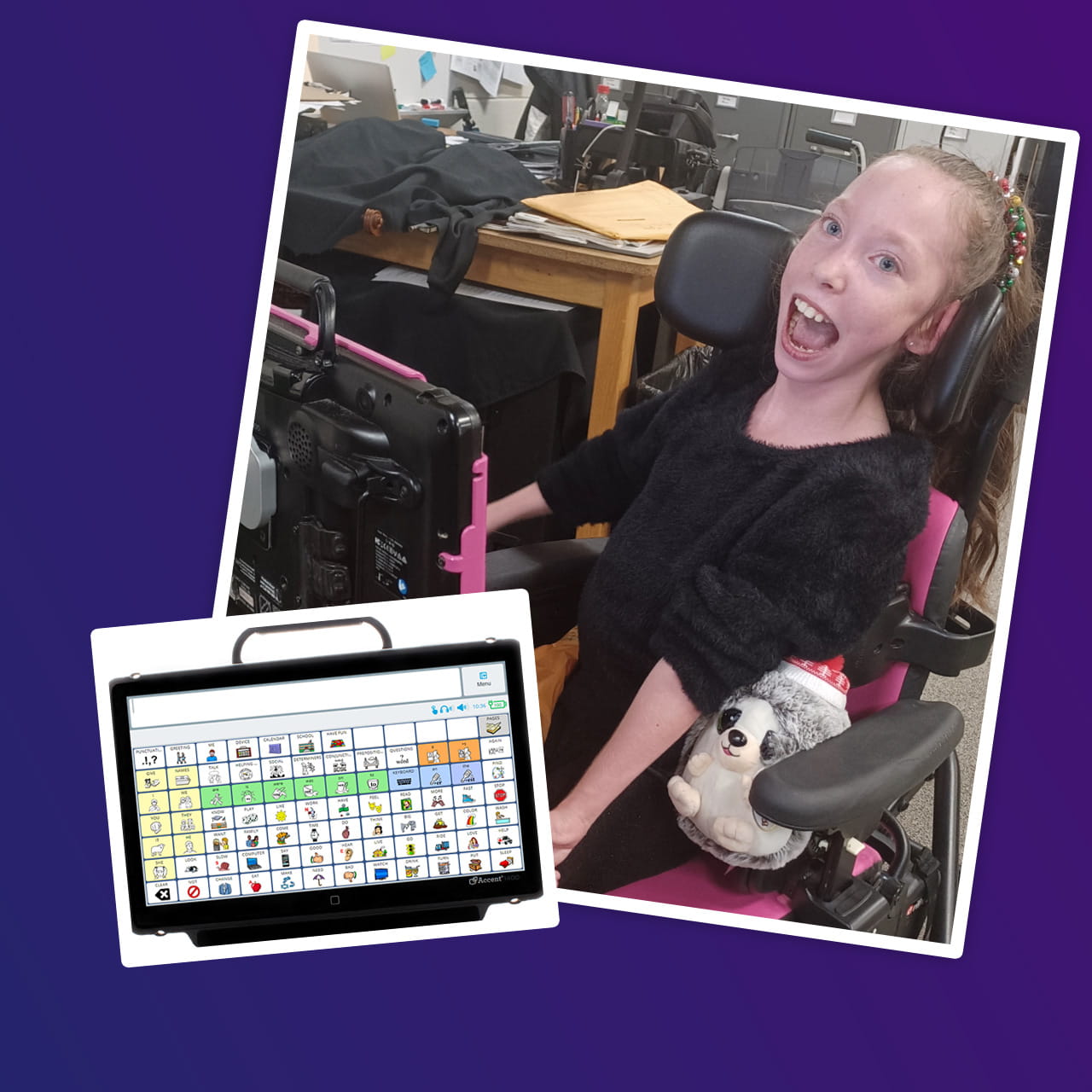
As part of her cheerleading team, Laila participates in activities and celebrations with pride. Her communication may look different from her peers’, but her enthusiasm, energy, and desire to connect are the same. With her Augmentative and Alternative Communication (AAC) device, Laila can cheer with teammates, talk with friends, and share stories about her day.
“She is a huge personality in a little body. She is the most outgoing student I have ever worked with,” reflects her paraprofessional, Heidi Pittard. For Laila, communication requires intention, assistive technology, patience, and support—but anyone who knows her will tell you she has plenty to say.
Laila uses an Accent 1400 communication device with eye-gaze access, word prediction, adaptive access, and AI-supported language features. But this story is about more than a device. It is about what is possible when a student has the tools, time, and opportunities to communicate.
“This is my talker. It helps me speak. Please give me a minute while I type what I want to say.” — Laila
Communication Access for AAC Users Requires Time and Support
Laila’s request to “give me a minute” carries a powerful lesson: communication is not a race, and competence cannot be measured by how quickly someone responds. For students who use AAC devices, successful participation often depends on whether people are willing to slow down, ask meaningful questions, and wait long enough for their voice to come through. Research suggests that added wait time can make a meaningful difference for AAC users, whose communication pace may be much slower than spontaneous speech.
Heidi Pittard, Laila’s former paraprofessional, understood that Laila’s challenge was never a lack of thoughts, ideas, or understanding. The challenge was whether the adults around her could create space for those ideas to emerge. When teachers and support staff began to wait with intention and stopped treating Laila’s silence as an absence of understanding or knowledge, they discovered what had been there all along: Laila had so much to say—and she was eager to be heard.
Assistive Technology in Action: More Than an AAC Device
Laila’s successes grew from the interaction of assistive technology, educators, and high expectations. Her AAC device remained available throughout the school day, not only during academic tasks. Adults created opportunities for her to respond, make choices, express needs, and join the social aspects of school. Rather than speaking for her, they modeled, prompted, waited, and stepped back when she was ready to communicate independently.
High Expectations for AAC Users Begin with Literacy and Assistive Technology
Heidi understood that high expectations for AAC users include explicit access to literacy instruction. Rather than relying only on stored phrases, she treated spelling as essential to Laila’s independence, academic participation, and self-expression. This reflected a CAST UDL-aligned belief that students need multiple ways to build, select, and communicate words when the exact language they need is not already available in their AAC system.
UDL in Action: Flexible AAC, AI, and Assistive Technology Supports
Heidi saw that Laila needed more than access to pre-programmed language—she needed flexible tools and strategies to create her own messages across academic and everyday contexts. 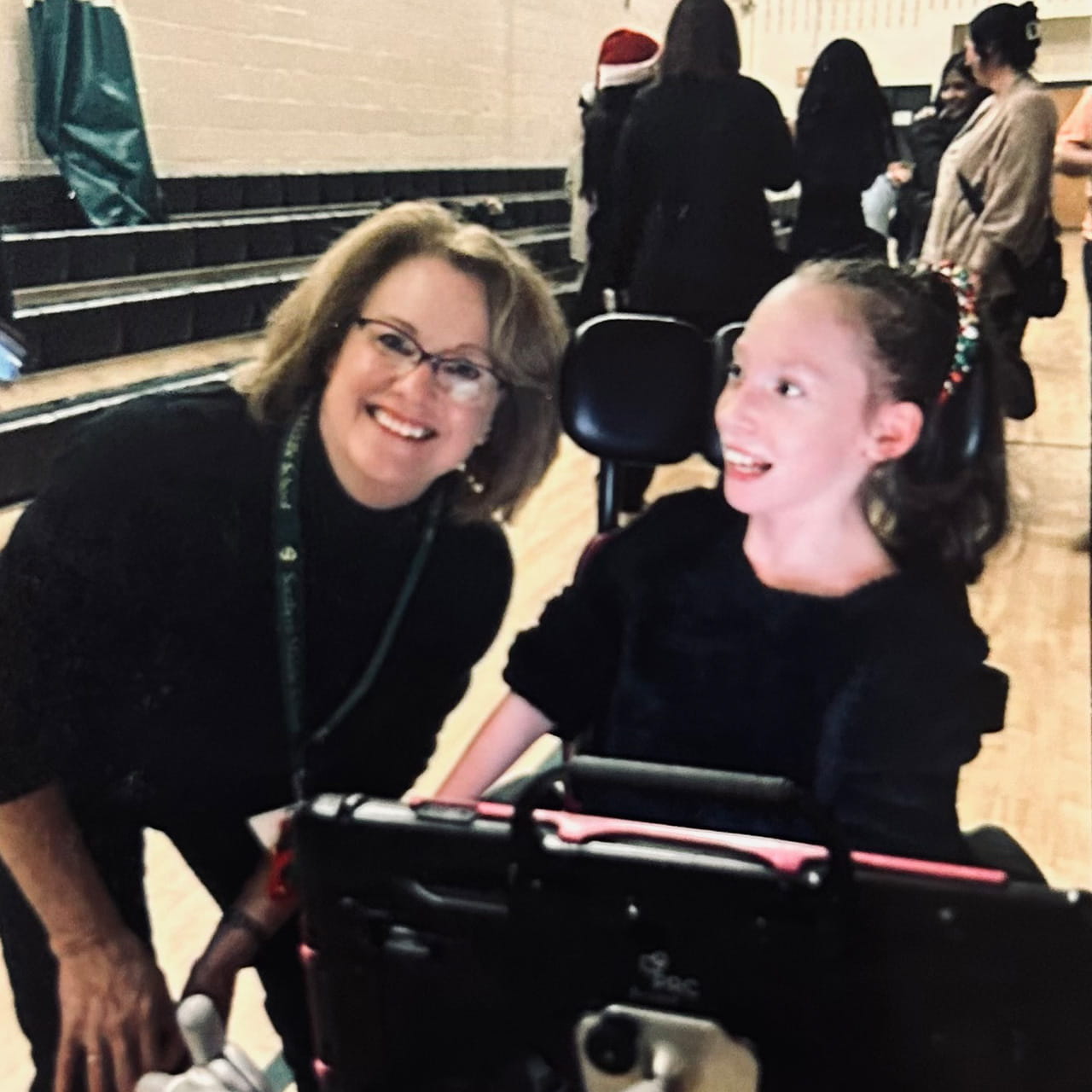
In science, technical vocabulary was not always available as a ready-made phrase in Laila’s talker. When a word was missing, Heidi did not stop the lesson or lower expectations. Instead, she helped Laila problem-solve by trying related words, typing the first letters, and scanning AI-generated word prediction options to find the word she wanted. Eye gaze, spelling, word prediction, and meaningful academic content worked together to support Laila’s participation in class discussions and assignments.
High expectations were essential to Laila’s growth. Educators presumed competence and created chances for her to participate, respond, make choices, and connect. This made Laila’s personality more visible. Through her communication device, she could joke with school staff, talk about friends, share stories, celebrate wins, and share the everyday details that help relationships grow. The assistive technology did not create her personality. It removed barriers and gave others greater access to her as a student and preteen.
Building Confidence and Self-Advocacy Through AAC Communication
One of the most important outcomes of Laila’s AAC journey has been self-advocacy. Over time, she learned to communicate her needs, preferences, thoughts, and ideas more independently. She could ask for a drink, a break, medical support, or assistance, and she could share what she liked, wanted, and cared about.
AAC, AI, and Assistive Technology Create New Communication Possibilities
Laila’s communication system includes word prediction and adaptive supports that can make communication more efficient. In this context, AI is not a replacement for human interaction or Laila’s ideas. It works quietly in the background to reduce effort, help locate words, and support message creation.
Technology matters, but access alone is not enough. Laila’s story shows why schools also need leaders who presume competence, maintain high expectations, and treat communication systems as essential tools that belong with students wherever communication occurs.
“If we don’t have expectations for students, then they meet exactly the expectations we have for them.” — Heidi
Takeaways: Assistive Technology, AAC, and AI Lessons from Laila’s Story
- Assistive technology is access to voice. Laila’s AAC device supported communication, participation, connection, and self-expression.
- Presume competence and provide the right supports. Students may need time, accessible technology, training, and people who believe their voice matters.
- Keep AAC available everywhere. Communication happens across academic, social, extracurricular, and everyday school settings.
- Use assistive technology to support independence. Word prediction, eye-gaze access, and AI-supported features reduced barriers while adults and peers modeled, waited, and stepped back.
- Focus on belonging. The impact of assistive technology is seen in friendships, humor, choices, confidence, and full participation in school life.
Opening Doors to Inclusive Technology, Communication, and Belonging
When Heidi reflected on her role, she described herself as a “door opener,” someone who helps change perceptions and create opportunities for students who use technology to communicate. That image captures the heart of Laila’s story: assistive technology opened doors to communication, self-expression, efficiency, independence, confidence, participation, and belonging.
“I think about myself as more of a door opener.” — Heidi
Conclusion: Inclusive Technology Systems Support Student Voice and Participation
Laila’s journey reminds us that assistive technology is not about fixing students. It is about removing barriers so students can communicate, participate, and connect. Through AAC, AI-supported tools, and people who presumed competence, Laila gained new ways to express herself and show others who she is.
When schools build inclusive technology systems that prioritize access and listen to students, learners are empowered to demonstrate what they can do.
Explore the CITES Framework and resources to consider how leadership, infrastructure, professional learning, and student-centered practices can help your school or district create more inclusive technology systems.
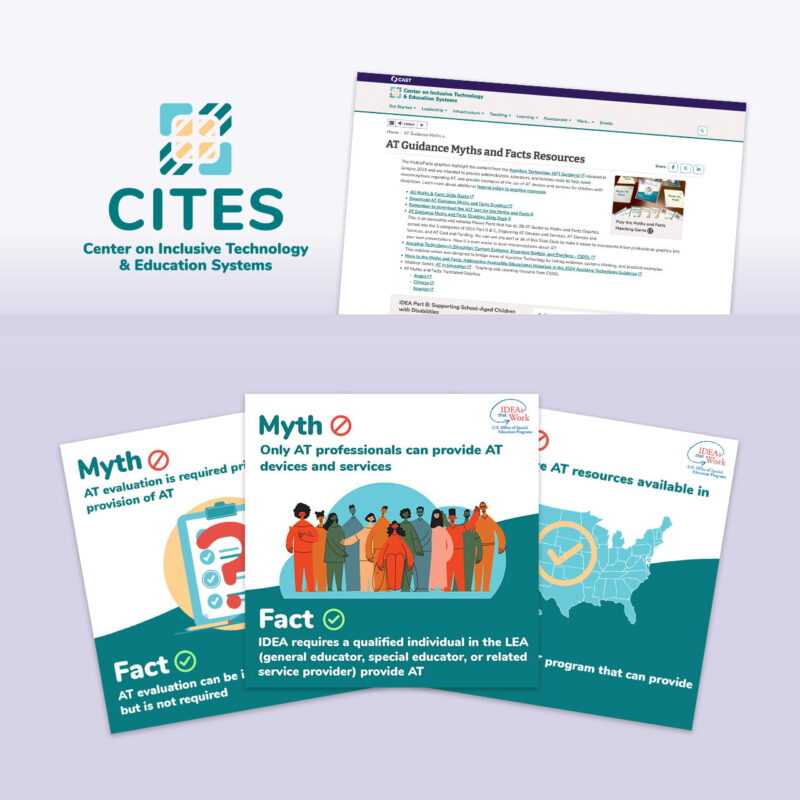
AT is not “cheating”
AT is not “cheating,” AT does not have to be high-tech, and should be considered as part of access to Free and Appropriate Public Education (FAPE) when needed—not as an optional extra. The Myths & Facts graphics summarize the federal Assistive Technology (AT) Guidance released in January 2024. They equip administrators, educators, and families with tools to dispel misconceptions about AT and offer examples of its usage for children with disabilities.
Resources to Help Your School Community Lead the Way with Accessible Learning Tools

Related articles